

1965 Stratocaster in Candy Apple Red
At the very beginning of 1965, a massive development was actively unfolding at the Fender Electric Instrument Company. On January 5th of that year, Leo Fender sold his company to the CBS Corporation for the tidy sum of 13 million dollars. Indeed, from the company’s founding in 1946, there are few, if any, milestones years that are more significant in the history of Fender, including CBS’s eventual sale of Fender in 1985 to Bill Shultz (for the slightly less tidy sum of 12.5 million dollars) and the subsequent formation of the current Fender Musical Instrument Corporation. Much of the significance of this transition can be attributed to the value assigned to pre-CBS guitars relative guitars built in the CBS-era (and beyond)in vintage market that emerged decades later. Truth be told, the first few years of CBS ownership of Fender saw only subtle changes in the quality and design of the guitars and amps—this relative lack of change is understandable during the early stages of such a transition. Yet, with the 1970s came some falloff in quality control and, more importantly, changes to design (e.g., 3-bolt necks, heavier bodies and finishes, etc.) that would prove less-than-popular at the time and in the following decades (though attitudes towards ‘70s Fenders have definitely begun to shift in the vintage market now that they are 50 years old!).
Though Leo Fender would stay on as a consultant at Fender until 1966 (before going on to other successful ventures with MusicMan and G&L), handing over the keys to the business that he had built from scratch must have been a bittersweet moment. One can only imagine what emotions might have surfaced whenever he took his last walk as owner around the Fender production floor. Perhaps this stroll occurred in the bewitching calm of the after hours, when the lights are low, the benches are vacant, and all the machines lay dormant. Undoubtedly, such an alluring atmosphere of craft and potential , where the scent of wood and industry mix and linger, was ingrained in Leo, who preferred to strap on a tool belt and work side-by-side with his employees, rather than occupy an office. Or, perhaps his last pass through his company as owner was during the working hours, punctuated with heartfelt farewells and resolute handshakes, all delivered with gentle understanding to loyal workers, like Abigail Ybarra or Tadeo Gomez, workers with whom he’d shared lunch many a time. Regardless, Leo’s eventual departure left a tremendous void there in the Fullerton, CA factory.
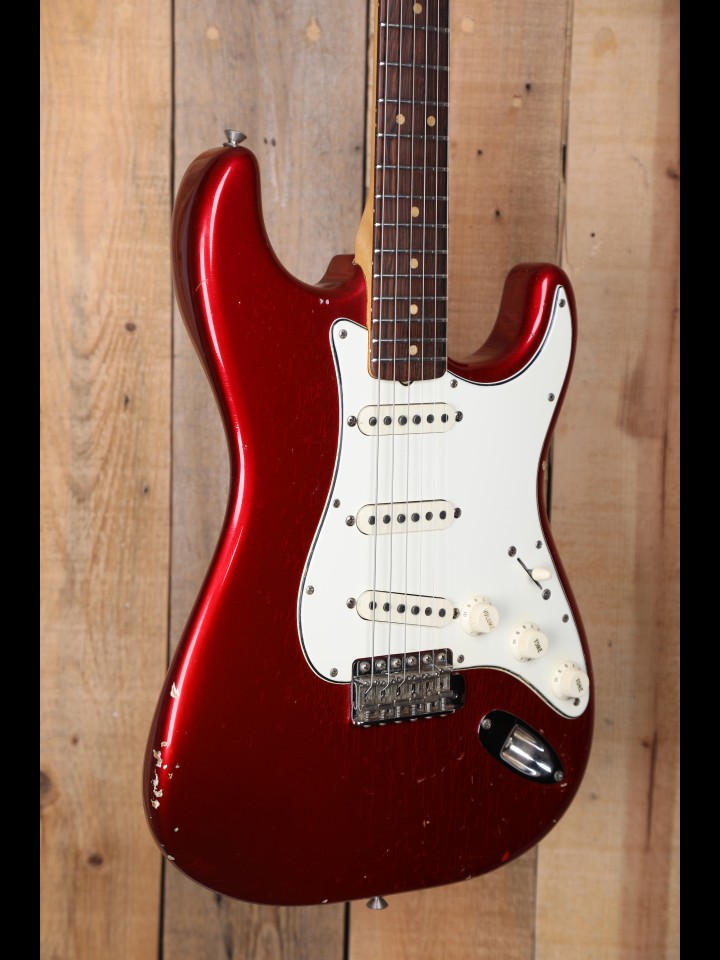
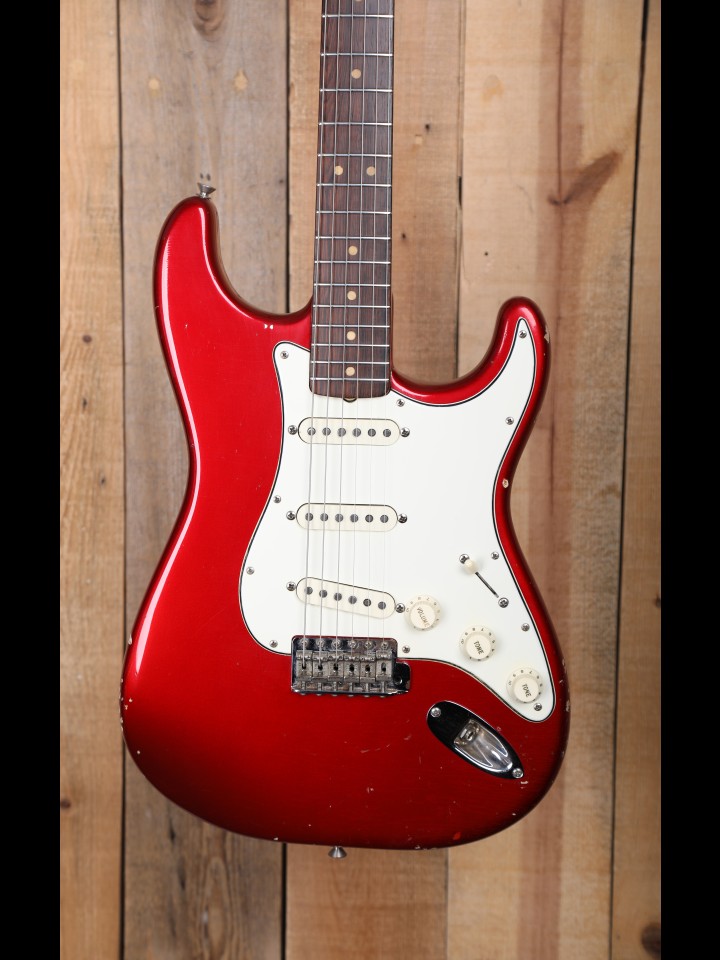
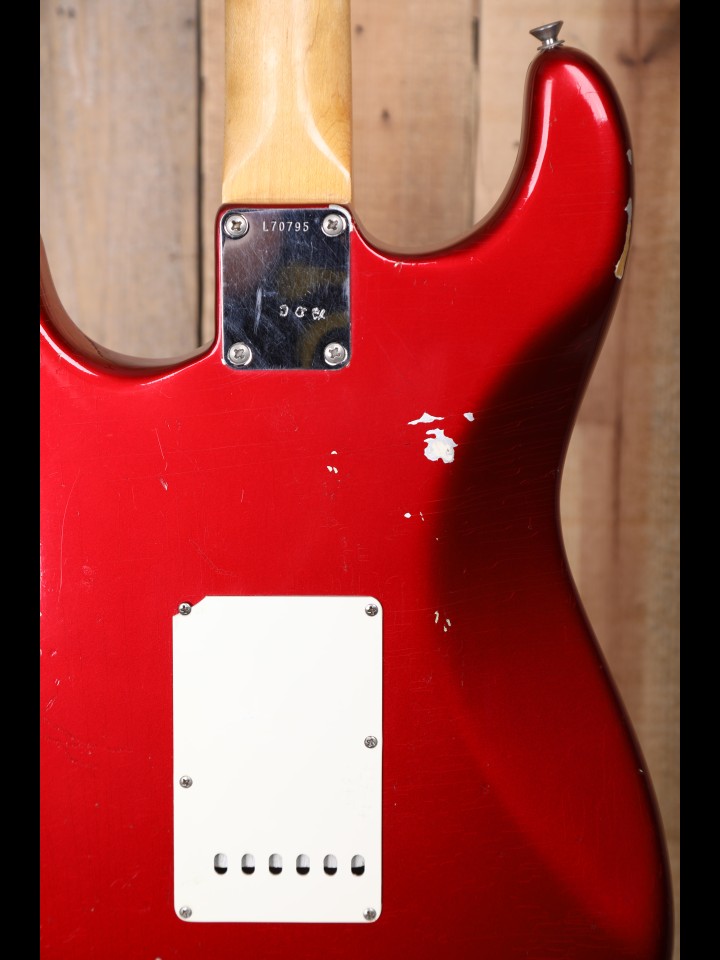
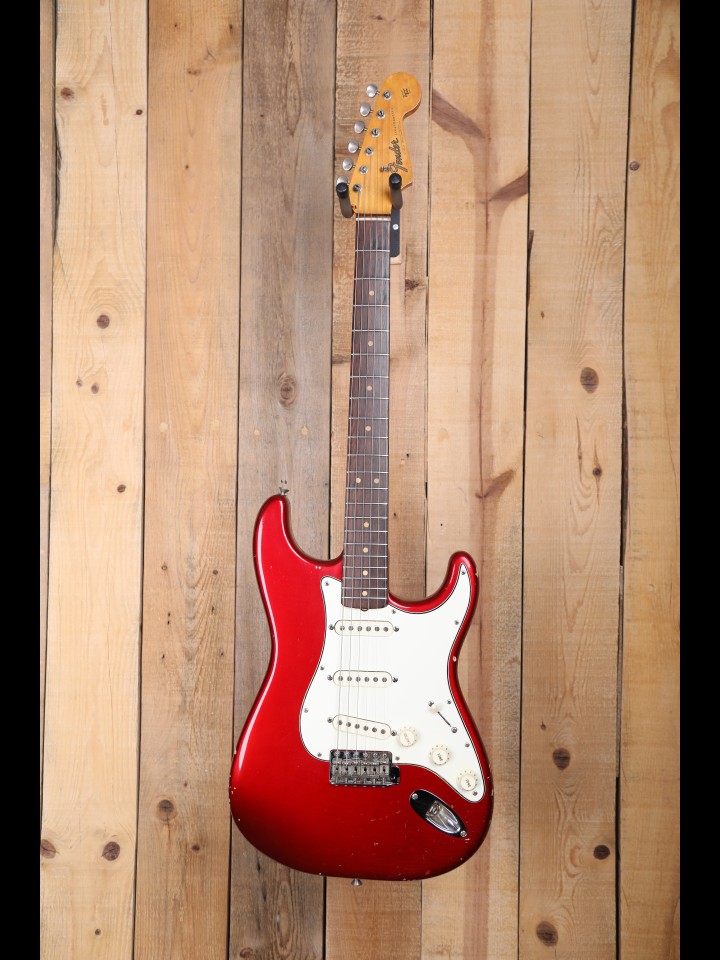
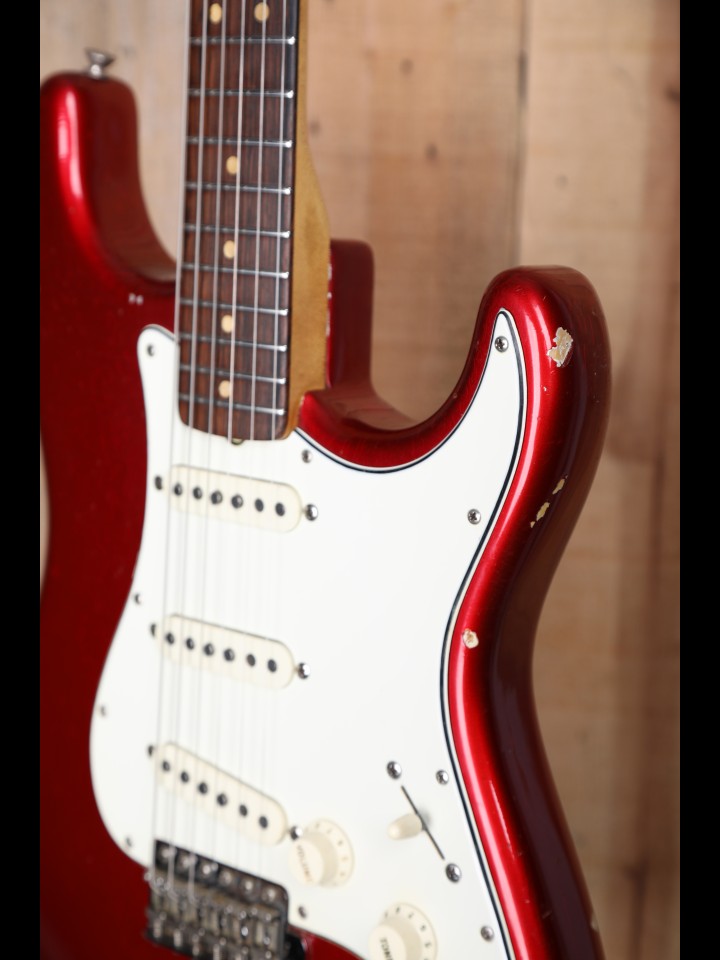
And, since we’re getting a little romantically theoretical here, during this transitional time there is an infinitesimal, distant possibility that Leo might have briefly spied and admired an L-series Candy Apple Red Stratocaster, destined to bear the serial number L70795, in process. After all, of the custom colors offered by Fender, it is rumored that Leo Fender's favorite color was Candy Apple Red. And, of course, when viewing this beautiful 1965 Stratocaster, it is easy to understand his preference: Its rich sparkly luster is downright salivation-inducing; and, like a classic red sports car, this guitar boasts exhilaration, even from a standstill, confidently asserting, “There is no limit to the fun I can deliver!”
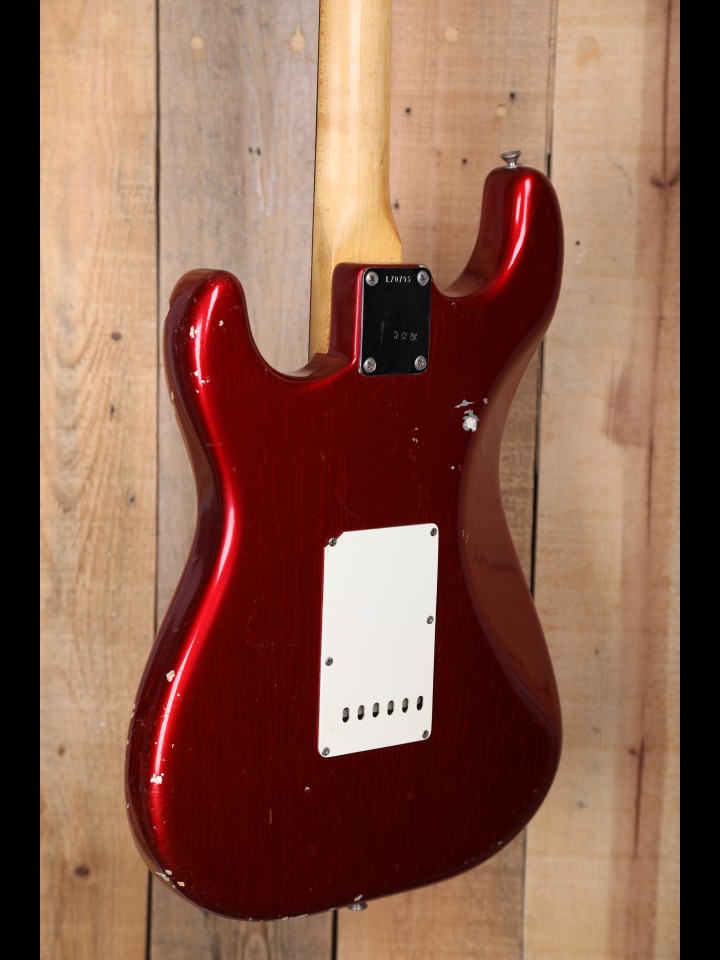
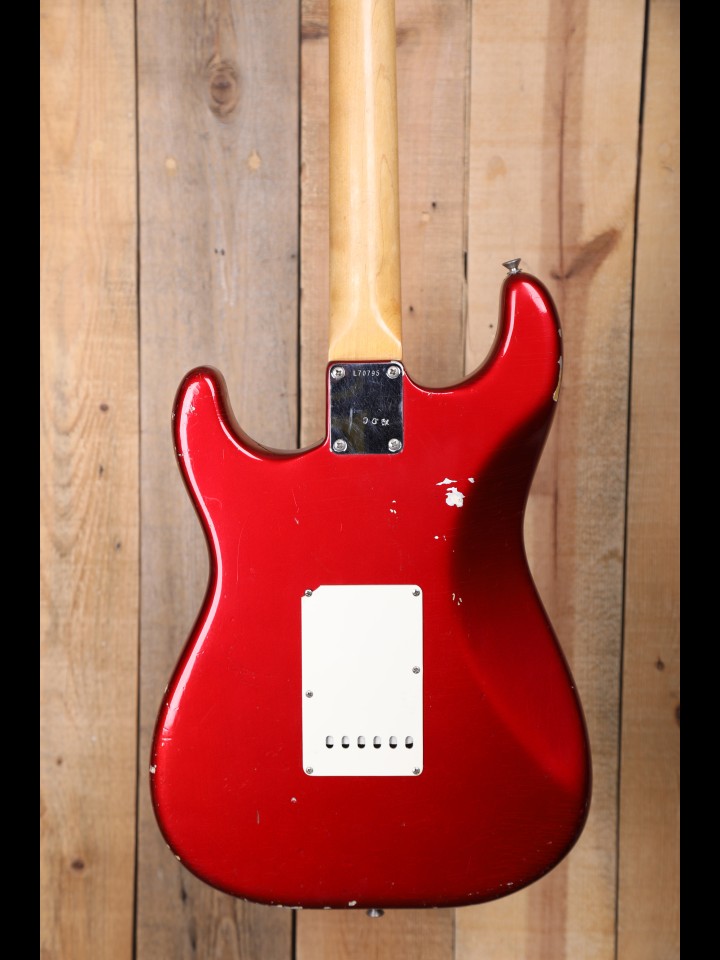
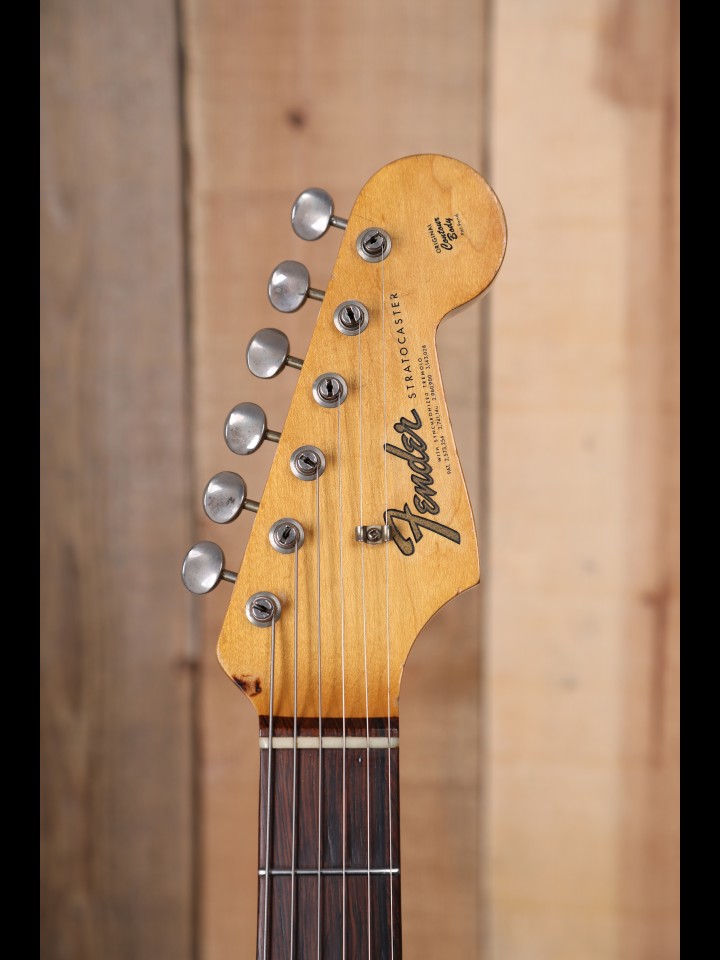
Given that the minimal influence of CBS on production during the initial change in ownership, guitars like this particular 1965 Candy Apple Red Stratocaster are generally referred to as “transition era” Fenders. Apart from a few subtle changes in the product design design (which were largely cosmetic), one could easily argue that transition-era guitars, particularly early examples like this ’65 Strat, are really more golden-era-Fender than they are CBS. In examining this Stratocaster, it is clear that this is a true transition guitar, in that one can readily see some pre-1965 features mixed with features that were introduced in 1965, like the white acrylic pickguard (which replaced the highly combustible mint celluloid nitrate). Along that line, the neck stamp, which reads 2 JAN 6 5B, tells us that the neck was finished sometime in January of 1965. Yet, the presence of clay dots on the fingerboard suggest that the neck was started in the year prior (or at least the fingerboard was!), as models produced in 1965 are generally known to have pearloid dots. Apart from the transitional style of the Fender logo (which is gold with a black outline), the presence of four patent numbers (versus five) also points to late 1964 or early 1965 production of the neck.
While the body is not dated, we do see the customary transition-era “paint stick” outline on the bass-side of the neck pocket (where we also see two of the original factory burgundy neck shims). In concert with evidence of the paint stick, there is one nail hole under the pickguard on the bass-side, in between the neck pickup and the neck pocket. The combination of neck stick outline and single nail hole is consistent with Fender’s initial move away from their earlier finishing system, where nails were hammered into areas of the body that would eventually be obscured to support a guitar while it laid on a lazy Susan during finishing. The new system involved screwing a “stick” to the body using the bass-side neck mounting holes, spraying the whole body, and then hanging it from the stick in a rack to dry–incidentally, the “stick” was actually metal electrical conduit hammered flat. Even so, during the transition years, a single nail was often used to help manipulate the guitar while it was sprayed on the stick, hence the presence of only one nail hole here. As finishing was not always consistent at Fender, we will note here that, by way of some of its various points of finish wear, this ’65 Strat clearly has a sealer coat (off-white), followed by a silver base for the Candy Apple Red—Candy Apply Red was typically achieved by applying a translucent red finish over a metallic silver (or sometime gold) base.
Meanwhile, in looking under the hood, all elements of this guitar appear to be original. All of the CTS pot codes read “1376505,” thus dating them to the 5th week of 1965. The ceramic disc capacitor and 3-way CRL 1425 switch likewise appear original and appropriate for the period. Most importantly, the original “grey bottom” pickups are all present and accounted for–two are dated “3-19-65,” while one is only initialled “HV.” Using lead connections to lugs on the switch and grounding to the pickguard shield, the resistance values for the pickups are as follows: neck = 6.14k, middle = 6.49k, bridge = 5.58k.
Originality and provenance aside, this 1965 Stratocaster checks all the boxes as a great vintage instrument. On a more superficial level, its beautiful custom Candy Apple Red finish has just enough hard-won patina to lend the guitar credibility as a player’s cherished instrument, a conduit for passionate expression that has earned its battle scars through decades of experience and use. More importantly, this Strat is not just a well-preserved vintage example of the most popular electric guitar design ever devised—no, this Strat is first and foremost a great musical tool. The worn-in feel of the neck offers an immediately comforting tactile connection that no new guitar can really deliver. At 7.5lbs, the guitar is physically well-balanced and resonant. And, once plugged in, the instrument embodies everything that we would expect from a Stratocaster of the transition era. In particular, the grey bottom single coil pickups (introduced in ’64) create an instantly identifiable scooped mid-range that is complemented by a tight low-end response and distinctive top-end clarity and jangle. Indeed, this tone readily transports the player into the sublime stratosphere of classic ‘60s tone. And thus, just like the tantalizing red sports car that demands to be driven, this stunning L-Series ’65 Stratocaster is a guitar that simply demands to be played.
Condition
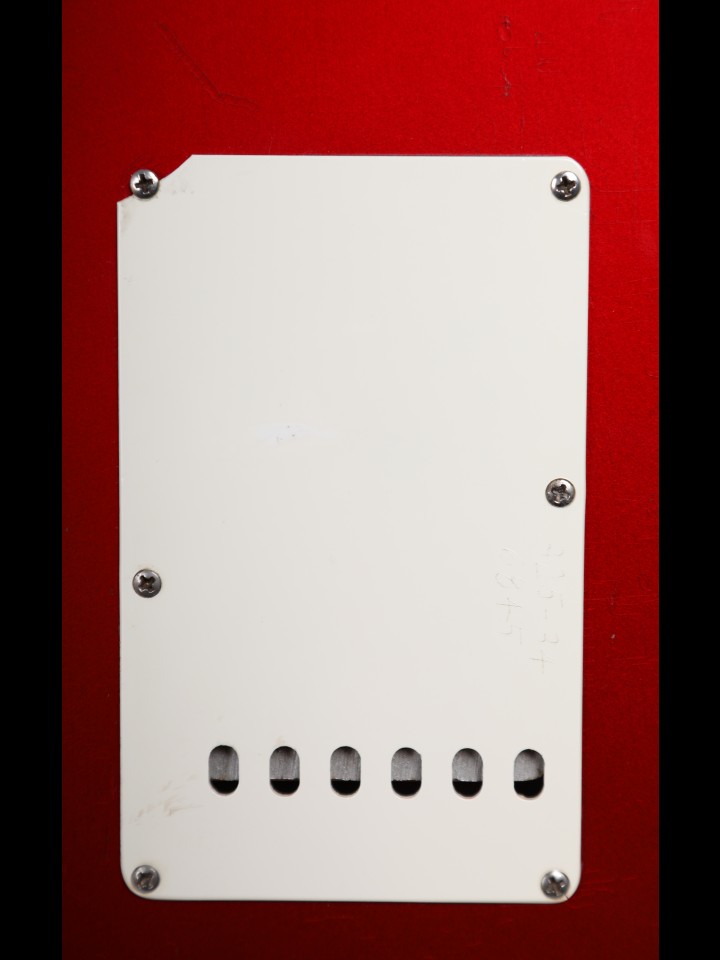
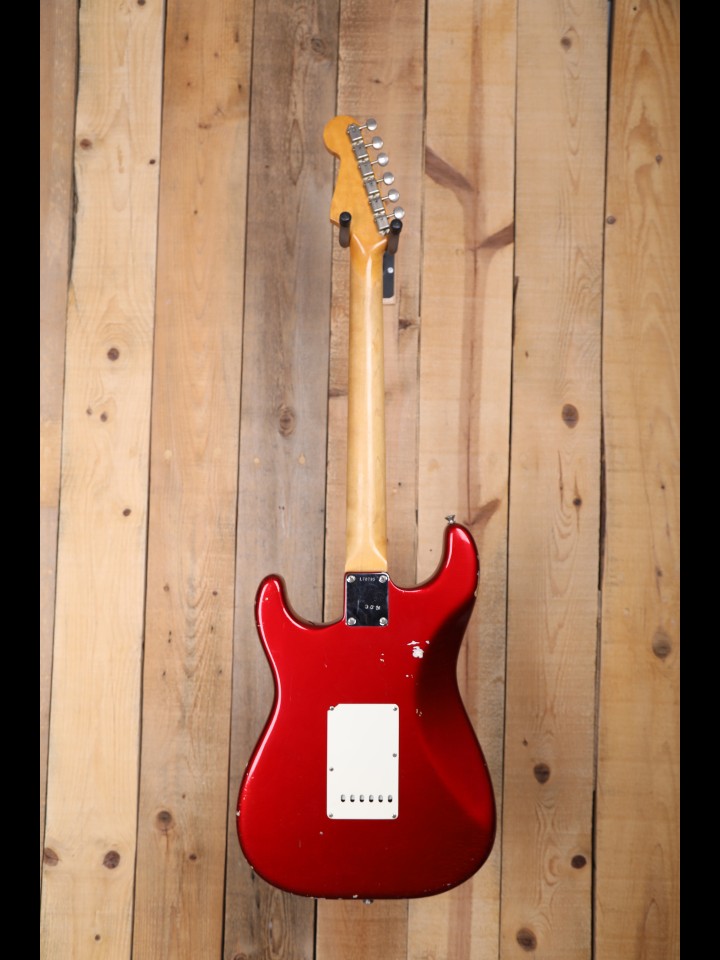
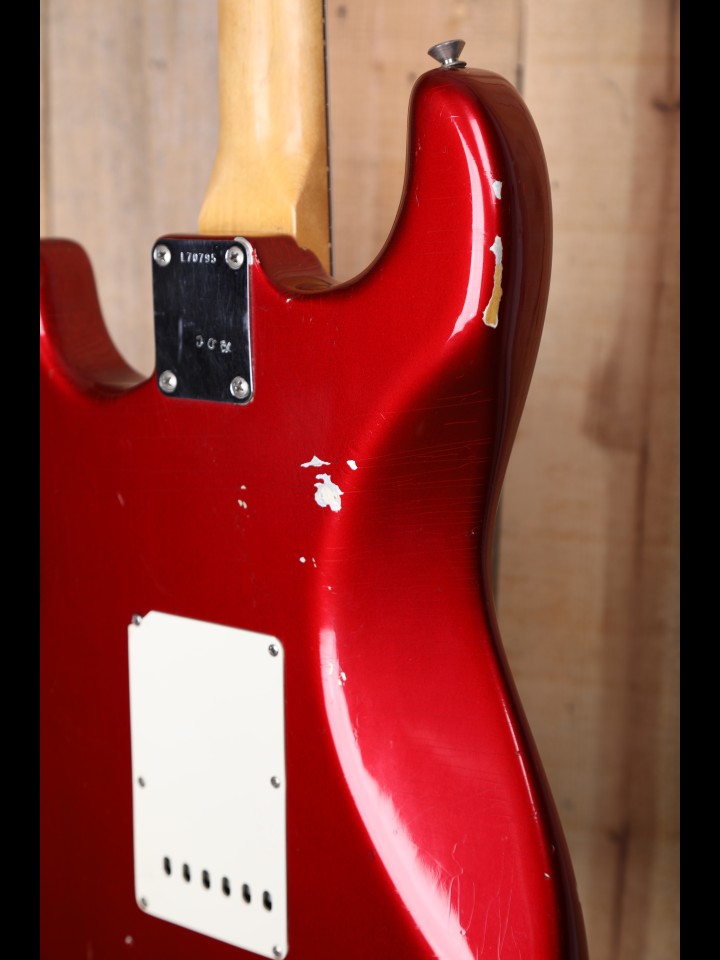
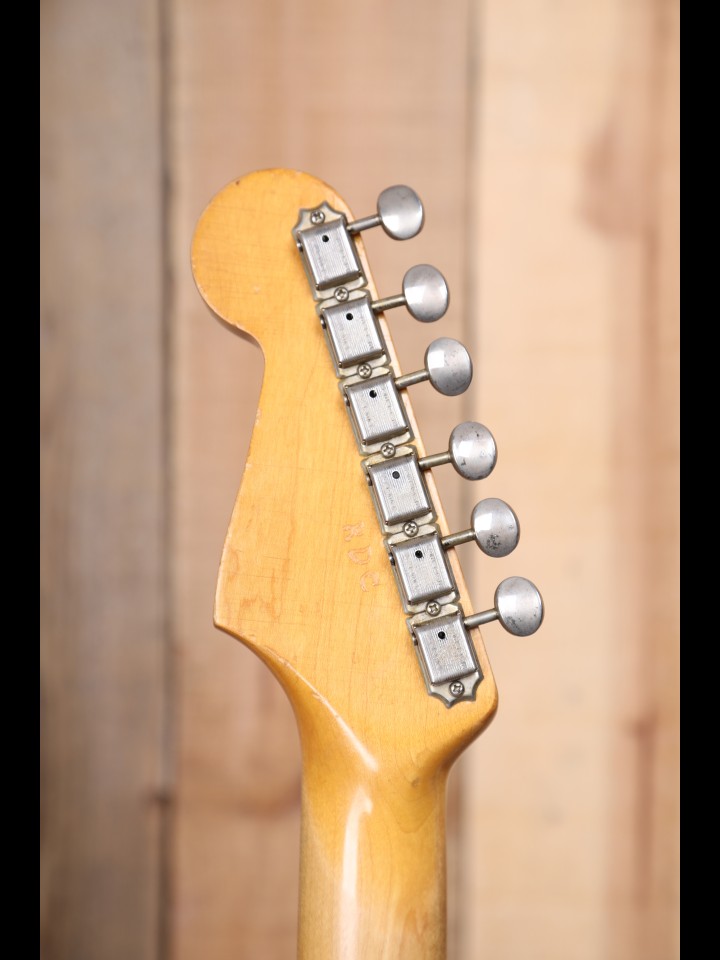
For its age, this Strat has survived very well. Cosmetically, the guitar’s body exhibits fairly extensive finish crazing, as well as numerous minor dents, scrapes, dings, and finish chips. Some of the finish chips extend to the wood itself, thus revealing the original white base coat and silver undercoat. These finish chips are primarily concentrated on the sides of the guitar, but some larger patches are evident on the back of the body, as well as the back edge of the bass-side horn. Yet, considering both the thin nature of the finish and the age of the guitar, one would characterize the wear and tear as consistent with regular use, rather than abuse! Though it is well-worn-in, the neck finish is mostly intact, with a slightly rude cigarette burn below the low E tuner shaft being the most noticeable bit of wear. The fingerboard is likewise in excellent condition. The frets are original and have been freshly re-crowned and dressed with approximately .030” of exposure remaining. Finally, at some point, a previous owner made the questionable (but relatively common) decision to etch their initials on the back of the headstock and neck plate. For good measure, they also added their SSN (beginning “325” suggesting Illinois origins) to the backplate—given that the backplate is readily removable in the event of a theft, this wasn’t much of a precaution in our view! The backplate is otherwise missing its treble-side corner, which has chipped away. Apart from these somewhat minor etchings, there are no indications of any modifications or structural repairs. VERY GOOD+ Condition
- Double Cutaway Solidbody
- Alder Body
- Custom Candy Apple Red Finish
- 3-Ply White/Black/White ABS (Acrylic) Pickguard with 11 Mounting Holes
- Aluminum Pickguard Shield (Signed by “Alice”)
- Nitrocellulose Body Finish
- Maple Neck (Stamped “2 JAN 65 B”)
- D-Shape Neck Contour
- Neck Depth: at 1st Fret = .792”, at 9th Fret = .92”
- Brazilian Rosewood “Veneer” Fingerboard
- White “Clay” Dot Fingerboard Inlays and Side Dots
- Gold Transition Headstock Logo with Black Border Decal (4 Patent Numbers)
- Nickel Double-Line Kluson 6-In-A-Line Tuners with Oval Buttons
- Tremolo Bridge (6-Mounting Screws) with “Fender Pat. Pend.” Stamped Individual Saddles
- Three “Grey Bottom” Single Coil Pickups (Dated March ’65) with Staggered Poles
- Pickup Resistance Readings: Neck = 6.14k, Middle = 6.49k, Bridge = 5.58k
- Master Volume and Two Tone Controls
- CRL 3-Way 1452 Pickup Selector
- CTS 250k Potentiometers (137-6505, or 5th Week of 1965)
- Ceramic “Pancake” Tone Capacitor
- Standard (“B”) 1 5/8” Nut Width
- 25 1/2” Scale Length
- 7 1/4” Fingerboard Radius
- Bone Nut
- Approximately 7.5lbs
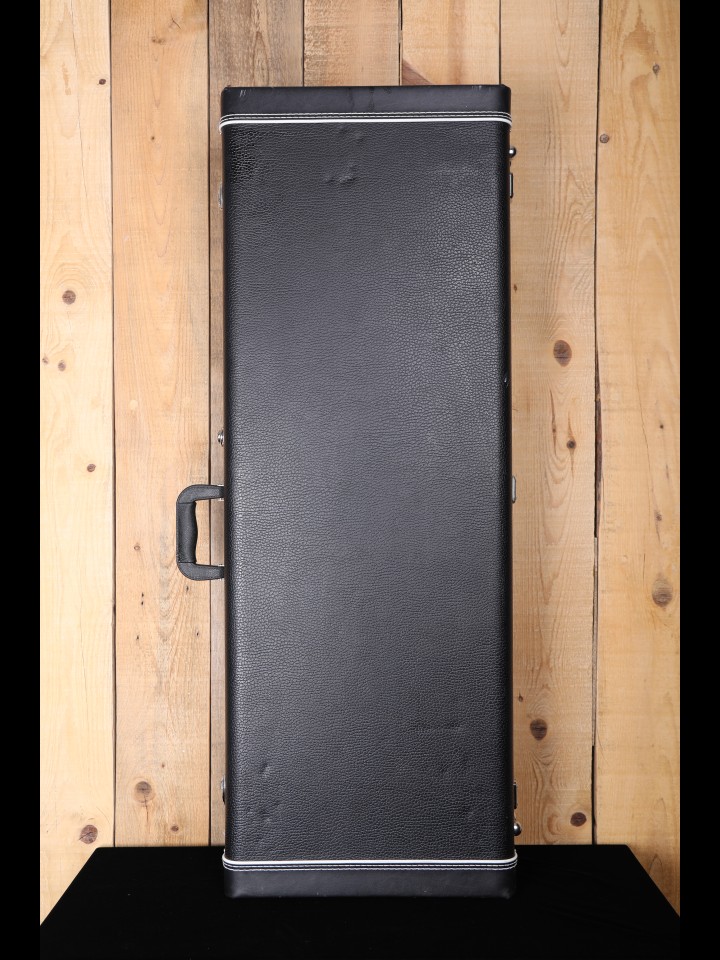
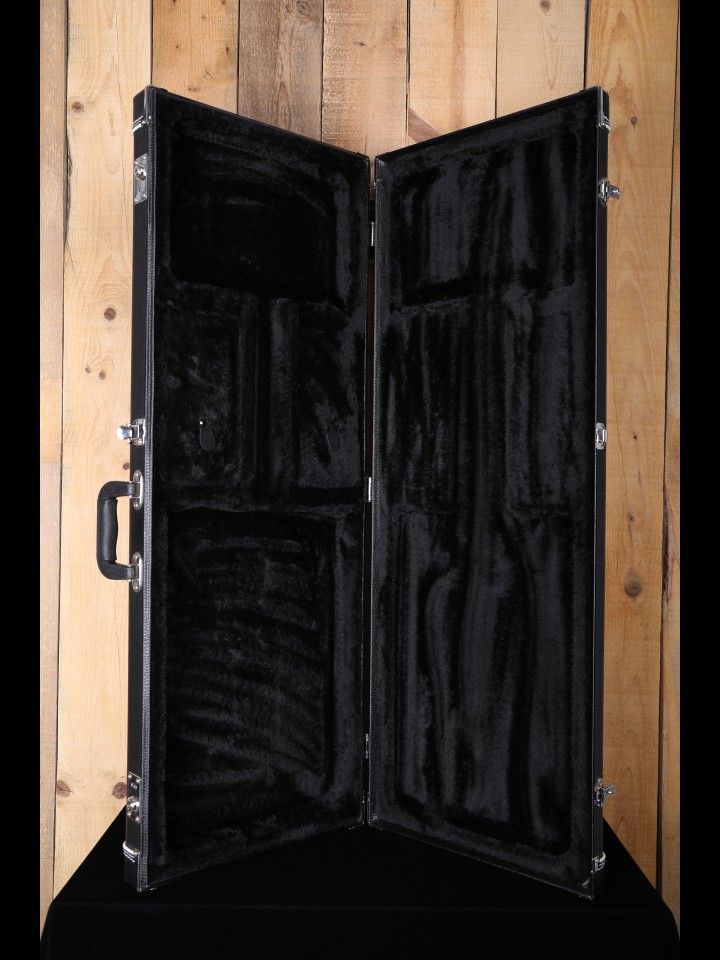
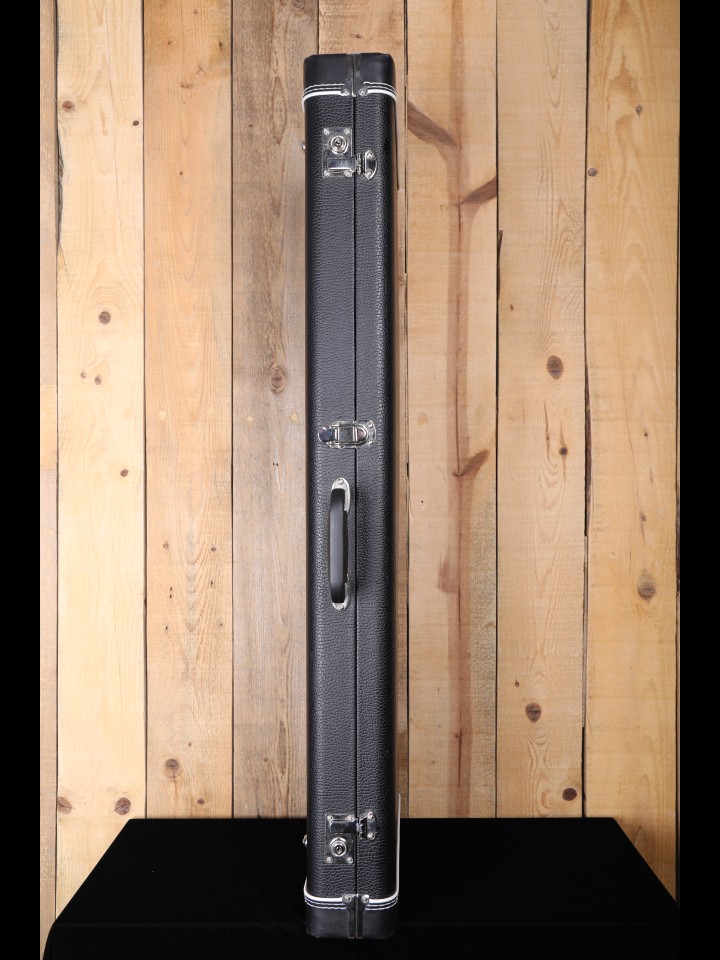
- Non-Original Fender Classic Series Rectangular Hard Case
| Brand | FENDER |
| Model | 1965 STRAT CAR |